Homs mosque massacre exposes fatal flaws in Jolani’s security apparatus
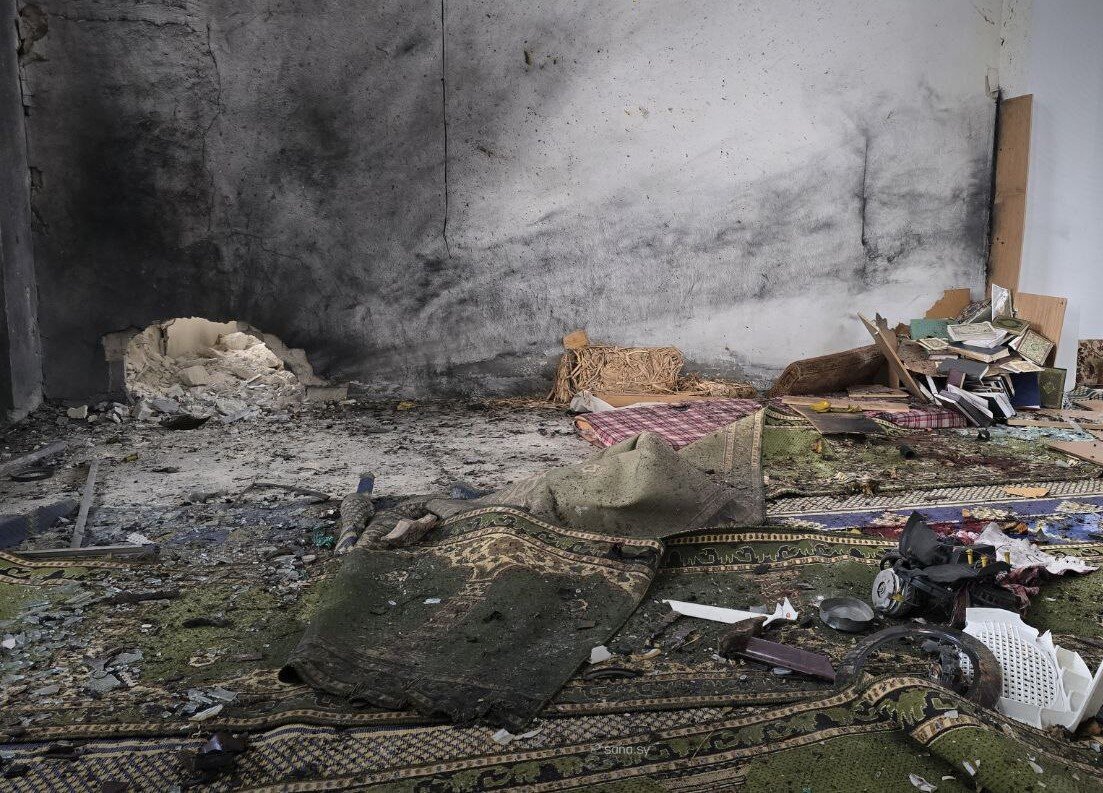
TEHRAN — A devastating explosion, described as a terrorist attack, tore through the Imam Ali bin Abi Talib Mosque in Homs’ Wadi al-Dahab neighborhood during Friday prayers on December 26, killing at least eight worshippers and injuring dozens more.
The apparent targeted strike on this Alawite and Shia sanctuary represents a catastrophic failure of Ahmad al-Sharaa’s (formerly Abu Mohammad al-Jolani) transitional regime to provide even basic security for religious groups.
Video circulating online captured scenes of absolute chaos as worshippers rushed out of the mosque in panic.
Some carried the wounded on makeshift stretchers, while others transported victims, shrouded in cloaks, toward waiting ambulances.
The explosion appeared to erupt from a corner of the main prayer hall, gouging a crater into the wall and scorching its surroundings.
Prayer rugs lay torn and scattered amid debris, with religious texts and fragments strewn across the floor. Local officials told Reuters the blast was likely triggered by a suicide attacker or explosives planted inside the sanctuary.
While the Syrian Foreign Ministry issued a statement condemning the “cowardly act” as an assault on human values and said it “continues to combat terrorism in all its forms,” critics argue that official rhetoric has yet to be matched by effective field protections.
Reports have noted a concerning trend of instability since the December 2024 transition, including incidents of Alawite families in Damascus suburbs being pressured to vacate their homes and reports of targeted violence against Shias.
This security vacuum has coincided with a resurgence in ISIS activity, which many analysts attribute to the rapid dismantling of previous security frameworks.
The current environment recently prompted Alawite spiritual leader Ghazal Ghazal to call for a general strike, citing a fundamental failure to prevent the displacement of minority neighborhoods.
Critics say the new regime’s dismantling of state protections and reliance on radical militias has left communities such as Alawites exposed, fueling a resurgence of unchecked sectarian violence and terrorism.
Leave a Comment